First, notice the blank space
Bare paper can become water, mist, sky or distance; it is not background but an active part of the image.
Complete free archive
Chinese ink painting uses ink tones, brush speed and empty space to organize landscapes, birds, flowers and figures, valuing spirit and atmosphere rather than simply black-and-white depiction.
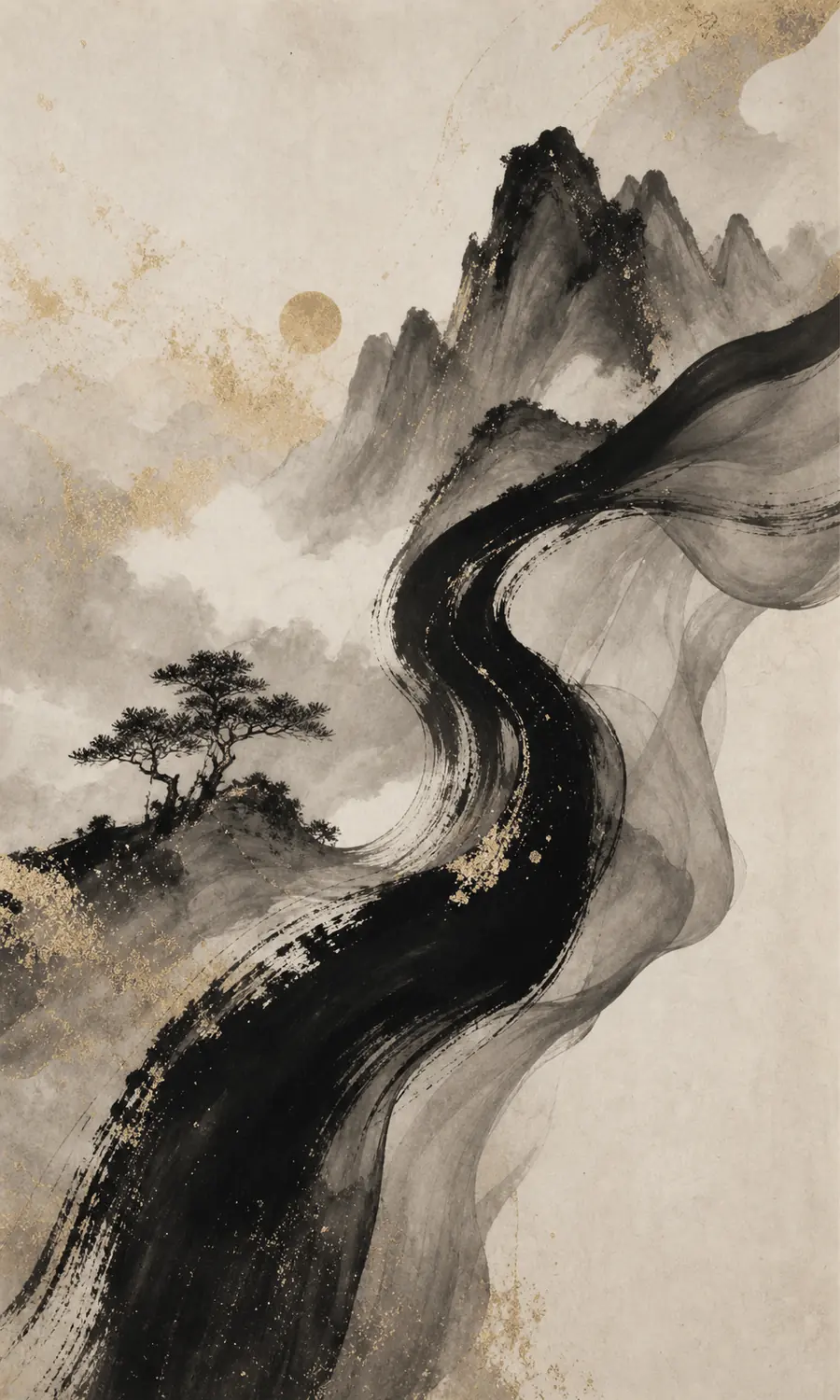
Are the unpainted areas truly empty, or are they holding mist, air and room for your imagination?
Bare paper can become water, mist, sky or distance; it is not background but an active part of the image.
One ink moves from dense black to pale wash, creating distance and material through water, speed and pressure.
Pauses and continuities between strokes make the image breathe, inviting the viewer to complete what remains unstated.
These are comparative observation levels, not ratings of artistic value or quality.
Read the brush first, then the emptiness. Good ink painting is not about more detail; each stroke has direction and each blank area has purpose.
It does not try to fill the object. Weight, dryness, wetness and speed of a stroke suggest form and breath. Empty space is not unfinished; it holds cloud, water, wind and imagination.
Like one breath landing on rice paper, where the unpainted space also speaks.
Do not rush to fill every wall and surface; let the space between objects join the composition.
Limit the palette and use drape, tonal depth and one focal point instead of dense pattern.
In mist, backlight or distant views, preserve broad quiet areas and let the subject occupy less of the frame.
Notice the distance among a cup, paper, stone and branch, and the natural traces carried by each material.
Shared qualities: Both use ink, blank space and brushwork to build space and vitality.
Different choices: Chinese ink painting is a broader medium and language; Shanshui focuses on landscape order, journeys of looking and inhabitable space.
Shared qualities: Both value ink, water, speed and what remains unpainted.
Different choices: Chinese ink traditions include meticulous and expressive modes, figures, flowers and landscape; Sumi-e often emphasizes reduction, Zen inflection and decisive strokes.
Chinese ink painting visual language, rice-paper texture, brush ink shifting dry wet dark pale, generous empty space, landscape or birds-and-flowers subject, poetic composition, black white grey with slight pale color, living spirit, original image, not copying a specific historical painting
Avoid Western oil-paint lighting, AI gibberish calligraphy, overfilled composition, cheap Chinese-style stickers, direct copy of ancient or master works
Ink painting developed through Chinese calligraphy, literati painting, landscape painting and Chan-related aesthetics, with a powerful brush-and-ink system after the Song and Yuan periods. Its sources include brush, ink, paper, scroll viewing, poetry-calligraphy-painting-seal integration and the relation between nature and mind.
Do you enjoy the space it leaves for imagination, or does it feel too quiet?