 Style Atlas
先分清工艺与外观
蓝晒是什么?为什么不等于蓝色滤镜?
约翰·赫歇尔于1842年提出蓝晒工艺。MoMA 的蓝晒术语资料说明了光、铁盐感光材料与普鲁士蓝影像的关系。物体直接放在感光纸上形成的接触影像,是理解植物蓝晒的一个入口;不能反过来认定每张蓝色植物图片都由这种工艺制成。
安娜·阿特金斯从1843年开始出版以蓝晒记录藻类的书。伦敦自然历史博物馆的介绍提供了她的植物研究与出版背景。历史图像既与识别标本有关,也有画面组织;本页不会把数字植物图冒充科学标本记录。
在图里找证据
别只看蓝色,试着看边界
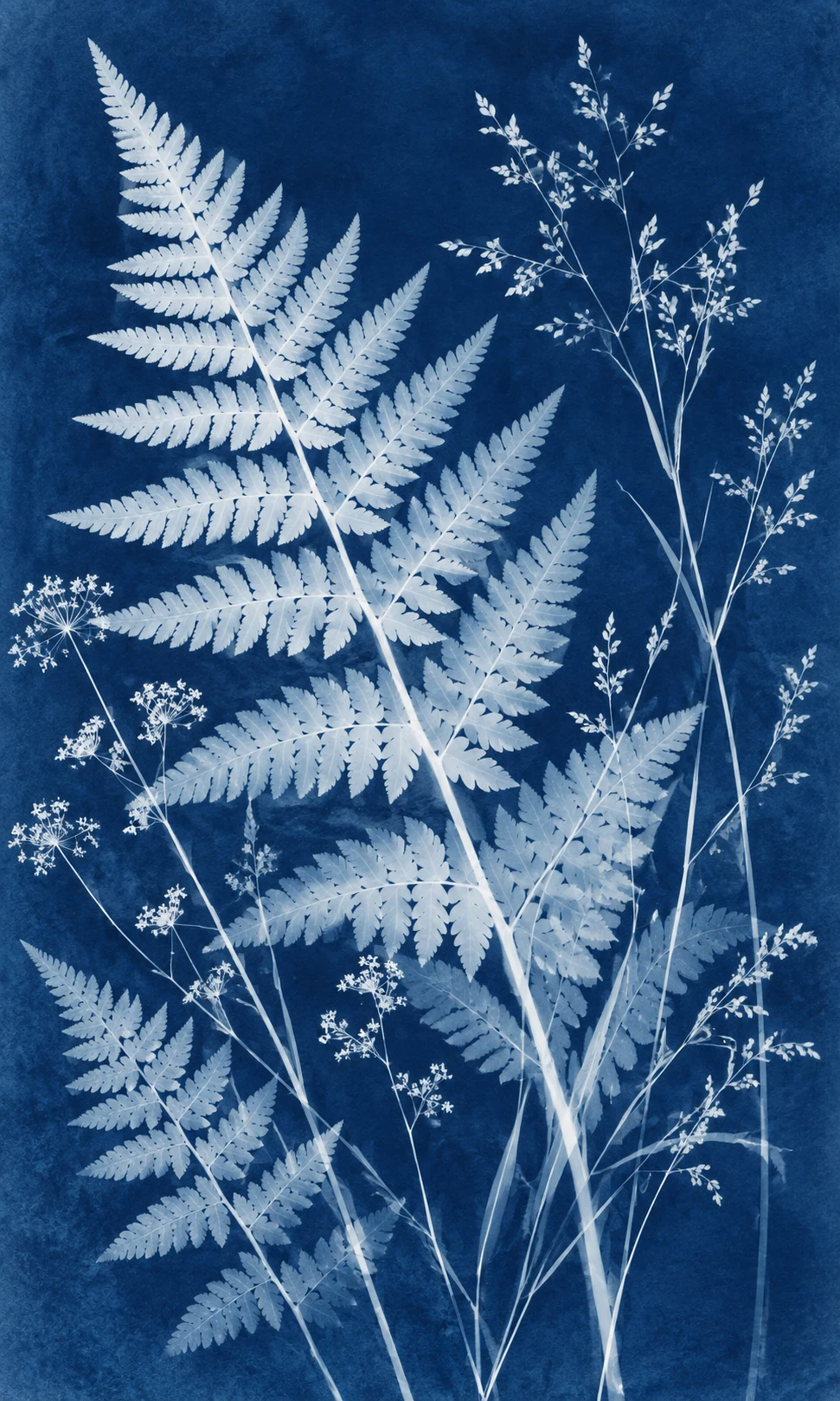
下面的观察只针对本页教学示意图。它帮助你注意视觉关系,不能用来推断真实纸张的配方、曝光时间或植物品种。
- 先看一片叶子的外边。中央蕨叶的细小分叉让一整块浅色形状有了复杂边缘。缩小画面后,哪些小边缘还可见,哪些只剩下一个整体轮廓?
- 再看形状之间的蓝。在两根茎之间找一个狭长空隙。不要急着给植物命名,先描述这个蓝色间隔的宽窄、方向,以及它如何将相邻形状分开。
- 最后看密集与稀疏。左侧大叶与右侧细茎的密度不同。看它们接近时画面怎样变重,分开时又怎样留下更安静的区域。示意图中的浅深层次不是实际曝光证据。
无需化学材料的练习
用三片纸,练习“看负形”
在深色纸上放三片浅色纸形。先让它们分开,再让两片发生重叠,不加纹理,也不改变背景。每摆一次,都看没有被覆盖的区域:它是一个连续空间,还是被切成许多细碎洞口?
给自己的布局定一个简单任务,例如为一张读书会卡片保留清楚的标题区域。若纸形抢走标题的位置,就移动它们,而不是继续增加装饰。这是构成练习,不是蓝晒制作教程。实际接触感光材料时,应另行遵循供应商的安全与使用说明;本页不提供化学配方。
避免只按颜色归类
蓝晒、青花与剪纸怎么比较?
青花瓷也能让蓝与白成为视觉主角,但要回到陶瓷表面、线描与器物形状,不要把颜色相近当作同一种媒介。中国剪纸可以帮助你继续观察实形与空处,不过剪纸是真实切除材料,不能与感光纸的颜色变化画等号。
如果想继续研究植物与空白,读琳派的装饰节奏,把同一问题带到不同的历史与材料语境中。这种比较不在判断哪种工艺更高级,而是在帮助你选择适合任务的视觉方向。
关于蓝晒的三个问题
蓝晒一定要拍相机照片吗?
不一定。直接放置物体形成接触影像就是一种方式;蓝晒与相机并非同义词。具体制作方法仍需单独学习。
给照片加蓝色滤镜就是蓝晒吗?
不是。相近的色彩外观,不代表使用了同一种成像材料和过程。数字模仿应标明是数字图像。
完整蓝晒档案免费吗?
本篇免费文章可独立阅读。图鉴中蓝晒主图与简介免费,完整档案属于 Plus;另外20篇精选完整档案免费开放,不需要订阅试用。
Cyanotype is a process, not a blue filter
Cyanotype uses a light-sensitive surface to form a blue image. A plant silhouette is a useful starting point, but color alone cannot tell you how an image was made. This introduction is for viewers and creators who want to read shapes and gaps before borrowing a photographic appearance for a design.
MoMA's cyanotype reference connects the process to Sir John Herschel in 1842 and explains its iron-based, light-sensitive basis. A contact image can be made by placing an object directly on the prepared surface. Our digital cover, however, contains no evidence of an actual exposure.
Anna Atkins began publishing her botanical cyanotypes in 1843. The Natural History Museum's account places her images within collecting, botanical study and photographic publishing. Follow that link for historical material rather than treating a generated fern image as an identified scientific specimen.
Read edges, openings and density
Choose one pale frond in the teaching image. Its repeated divisions create a complicated boundary, but the whole still reads as one larger shape. Reduce the image and notice which small edges disappear. The relationship between a broad outline and fine divisions can matter even before you identify the plant.
Now choose a strip of blue between two stems. Describe its direction and changing width. Thinking of it as a shape, rather than unused background, makes it easier to notice where the composition becomes crowded and where it can breathe.
Finally compare the large leaves on the left with the finer stems on the right. The unequal density gives the image a different visual weight across its width. These are observations about this digital illustration only. Its pale overlaps must not be read as a diagnostic of chemicals, paper or exposure time.
Try a paper exercise before a material technique
Place three light paper shapes on a dark sheet. Keep them separate in one arrangement and overlap two in another. Do not add textures or change the background. Compare the areas left uncovered: do they remain connected, or become a group of disconnected slivers?
Give the arrangement a real communication task, such as leaving a clear place for a book-club title. If a shape interrupts that place, move it before introducing another decorative element. This is an original editorial exercise in negative space, not a cyanotype recipe or an image-generation feature.
Working with photographic materials is a separate practical activity. Follow the product supplier's safety and handling instructions; this page does not provide chemical mixing directions. A useful looking exercise should not be mistaken for training in a material process.
Compare the question across different materials
Blue-and-white porcelain offers another blue-and-white relationship, but asks you to consider a vessel's surface, drawing and shape. Chinese paper-cut makes occupied and open areas visible through physical removal of material. Neither becomes cyanotype merely by looking similar in color or silhouette.
For another botanical composition, read our Rinpa introduction. Carry a question about spacing between the two pages while keeping their histories and media distinct. The aim is a more informed creative decision, not a ranking of traditions.
Does cyanotype require a camera?
No. Contact images are one important approach. The process and the use of a camera are not identical questions.
Does a blue photograph count as a cyanotype?
Not on appearance alone. A digital imitation should be identified as digital rather than offered as evidence of a physical printing process.
Is the complete archive free?
This article is free. Cyanotype's hero image and introduction are free in the atlas, while its complete archive requires Plus. Twenty selected complete archives are free to read without a subscription trial.
Sources · 资料与延伸阅读
从博物馆认识真实蓝晒
- The Museum of Modern Art — Cyanotype:工艺定义与历史入口。
- Natural History Museum — Anna Atkins’s cyanotypes:植物研究、影像与出版语境。
资料核实于 2026-10-21。本文练习与数字图像分析由 WonderElian Editorial 原创,不代表机构背书,也不是历史作品鉴定。